

If you're planning a ride, one question often comes up before you even put on your helmet: how long does an electric dirt bike take to charge?
For most electric dirt bikes, a full charge can take anywhere from several hours to most of a day, depending on the battery capacity, charger output, starting charge level, battery condition, and charging environment. A smaller battery may recharge relatively quickly, while a high-capacity performance battery can take considerably longer.
Understanding charging time isn't just useful for planning rides. It can also help you take better care of the battery and avoid common charging mistakes.
This guide explains how electric dirt bike charging works, what affects charging time, how to charge safely, and how to get the most useful life from your battery.
How Long Does an Electric Dirt Bike Take to Charge?

A typical electric dirt bike may take roughly 4–10 hours for a full charge, although actual charging times vary considerably between models.
For example, a bike with a smaller battery and a higher-current charger may recharge faster than a bike with a much larger battery using a lower-output charger.
Here's a simplified comparison:
| Battery Type | Typical Capacity | Approximate Full Charge Time* |
|---|---|---|
| Small battery | 5–10 Ah | 3–5 hours |
| Medium battery | 10–20 Ah | 4–7 hours |
| Large battery | 20–30 Ah | 6–10+ hours |
| High-capacity performance battery | 25 Ah+ | 7–12+ hours |
*These are general estimates, not guaranteed charging times. Always follow the manufacturer's charging specifications.
The easiest way to think about charging time is that a larger battery generally requires more energy and therefore more time to recharge.
However, battery capacity isn't the only factor.
Two electric dirt bikes with similarly sized batteries can have noticeably different charging times because they use different chargers.
What Determines Electric Dirt Bike Charging Time?
Several factors influence how quickly an electric dirt bike battery reaches full charge.
The most important are:
- Battery capacity
- Battery voltage
- Charger output
- Starting charge level
- Battery age and condition
- Ambient temperature
- Battery management system
- Charging efficiency
Battery Capacity
Battery capacity is commonly expressed in amp-hours (Ah).
A higher Ah rating generally means the battery stores more electrical energy. That's useful for range, but it also means there is more energy to replace after a long ride.
Charger Output
Chargers are often described by their output current, such as 2A, 3A, or 5A.
A higher-current charger can potentially recharge a compatible battery faster. However, you shouldn't simply choose the highest-amperage charger you can find.
The charger must be compatible with the battery and electrical system.
The U.S. Consumer Product Safety Commission specifically recommends using the charger supplied with a micromobility product or a replacement charger approved for that specific device.
Starting Charge Level
A battery at 20% doesn't need to receive as much energy as a completely empty battery.
This means charging from 40% to 80% can be much quicker than charging from nearly empty to 100%.
Battery Condition
A new, healthy battery generally performs differently from an older battery that has experienced many charge cycles.
Battery condition can influence both charging behavior and available riding range.
Temperature
Lithium-ion batteries don't perform identically in every environment.
Very cold or very hot conditions can affect charging performance. If the battery has recently been used hard, give it time to cool according to the manufacturer's instructions before charging.
Battery Capacity and Voltage: What Do They Mean?
If you've ever looked at an electric dirt bike specification sheet, you've probably seen numbers such as:
- 48V 15Ah
- 48V 20Ah
- 60V 20Ah
- 72V 25Ah
These numbers can look complicated, but they're relatively straightforward.
Voltage (V) describes the electrical potential of the battery system.
Amp-hours (Ah) describe the battery's capacity.
You can also estimate stored energy using watt-hours:
Watt-hours (Wh) ≈ Voltage × Amp-hours
For example:
48V × 20Ah = approximately 960Wh
A 72V 25Ah battery would contain approximately:
72V × 25Ah = approximately 1,800Wh
That's significantly more stored energy.
Consequently, a larger battery may provide greater potential riding range, but it can also require more time to recharge.
This is one reason you shouldn't compare charging times based only on voltage.
How Does Charger Output Affect Charging Time?
Charger output is another major factor.
Suppose two compatible chargers are designed for the same battery system:
- Charger A: 2A
- Charger B: 4A
In simplified terms, the 4A charger can deliver energy at roughly twice the current of the 2A charger.
However, real-world charging isn't perfectly linear.
The battery management system can regulate charging current, and charging typically slows as the battery approaches full capacity.
So if a manufacturer says a battery takes six hours to charge, you shouldn't assume that using a charger with twice the amperage will automatically reduce that time to three hours.
Never substitute a charger solely because it has a higher output.
An incompatible charger can create serious safety risks. CPSC has specifically warned against using "universal" micromobility chargers unless they have been tested and approved for compatibility with the specific device.
Does the Starting Battery Level Change Charging Time?
Absolutely.
Charging from 50% to 100% doesn't require replacing as much energy as charging from 10% to 100%.
Here's a simple example:
| Starting Battery Level | Approximate Energy Needed |
|---|---|
| 80% | 20% |
| 60% | 40% |
| 40% | 60% |
| 20% | 80% |
| 10% | 90% |
This is why it's useful to think about charging in terms of energy added rather than simply time connected to the charger.
If you're riding again tomorrow, you may not always need a complete charge immediately after every short ride.
Electric Dirt Bike Charging Time by Battery Size
Battery size is one of the easiest ways to estimate whether charging will take a few hours or most of a day.
Small-Battery Electric Dirt Bikes
Smaller electric dirt bikes designed for younger riders or lighter recreational use often have relatively compact batteries.
Because there's less energy to replenish, charging may take only a few hours with the correct charger.
This can be convenient for short riding sessions where the bike is used for a limited period and then returned to the garage.
Medium-Battery Electric Dirt Bikes
Medium-capacity batteries are common on recreational electric dirt bikes.
Depending on voltage, Ah rating, charger output, and battery management, a full charge may take approximately 4–8 hours.
For many riders, this works well with a simple routine:
Ride → cool down → charge → leave overnight → ride again.
Large-Battery Electric Dirt Bikes
Performance-oriented electric dirt bikes can use substantially larger battery packs.
A large battery might provide much more energy for extended riding, but it also means that recharging can take longer.
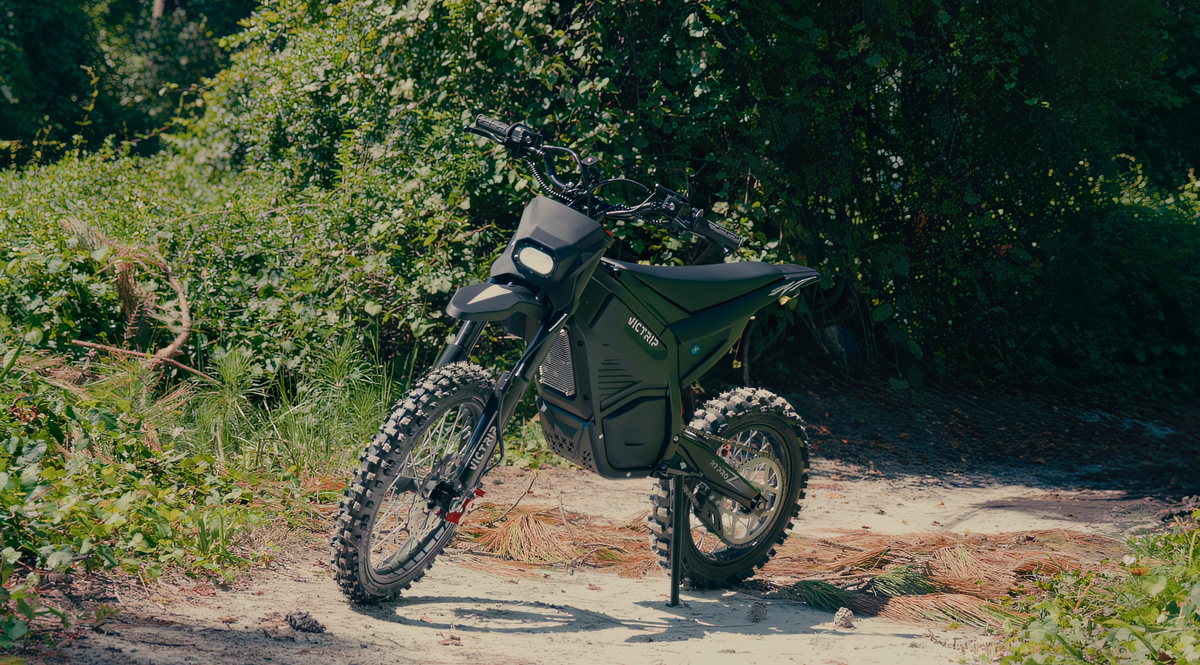
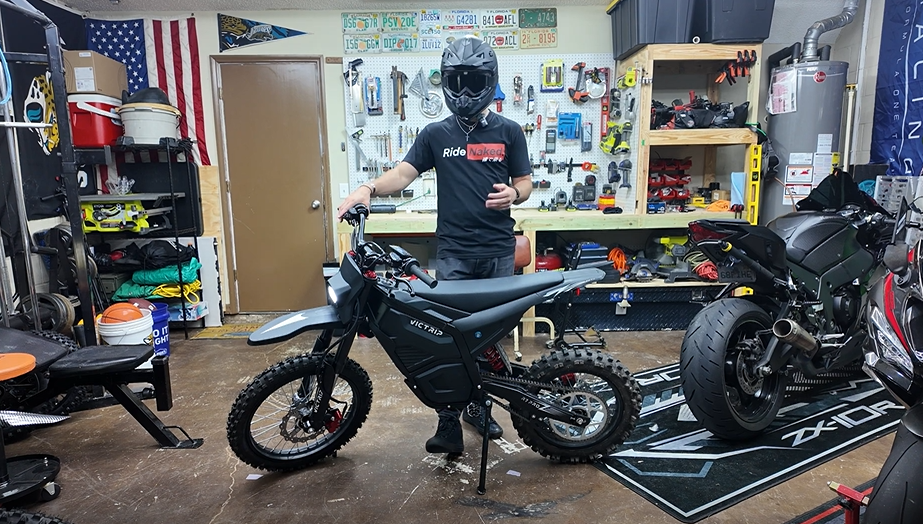
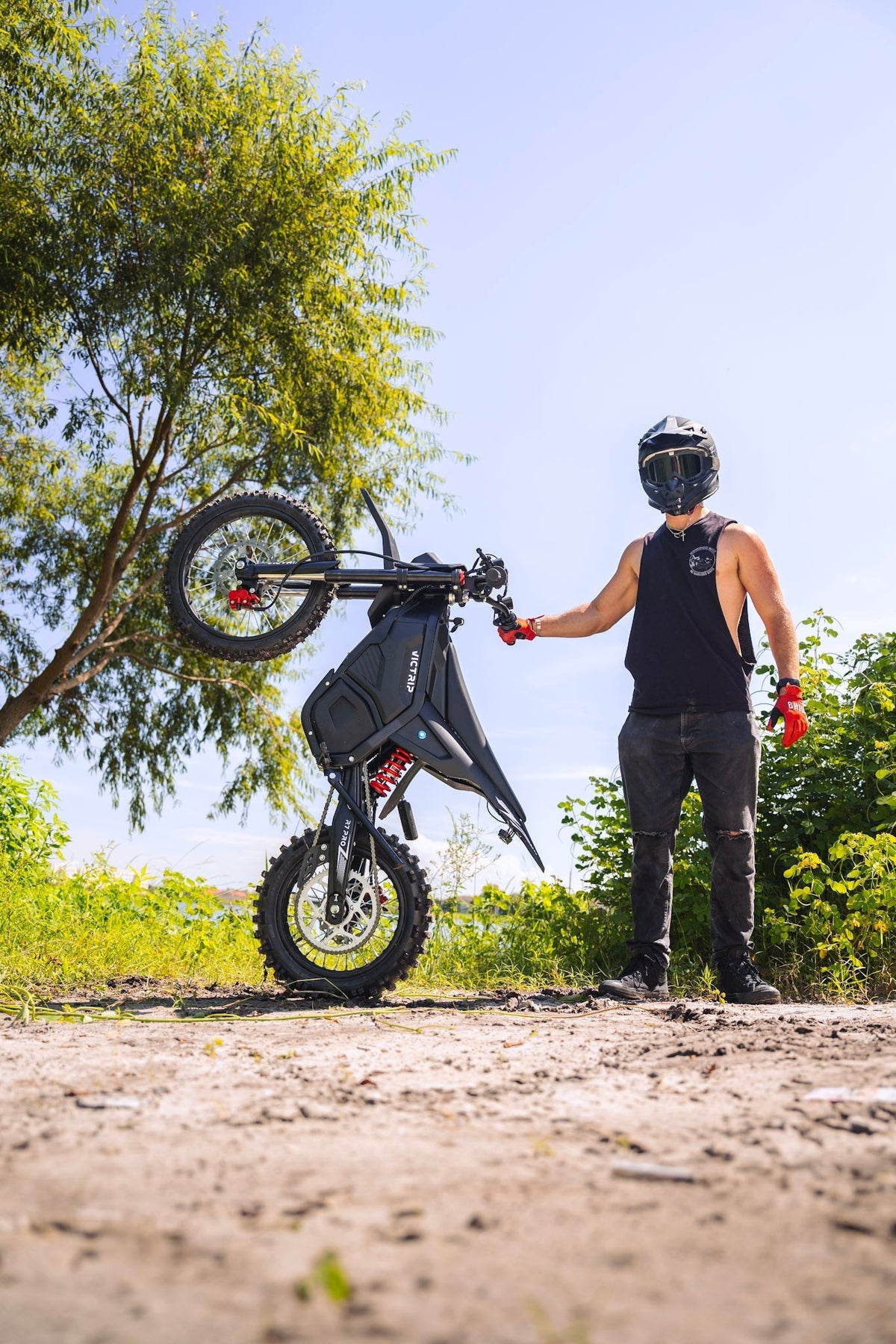
For example, VICTRIP's higher-performance R7 Pro uses a 72V 25Ah battery. With a battery of this size, riders should plan charging around their riding schedule rather than assuming a quick top-up will always be available.
That doesn't mean charging has to be inconvenient. It simply means battery planning becomes more important as capacity increases.
How to Charge an Electric Dirt Bike Correctly
A good charging routine is simple.
Step 1: Park in a Suitable Location
Place the bike or removable battery in a clean, dry, stable area with adequate ventilation.
Avoid locations where the battery can be exposed to excessive heat, moisture, or physical damage.
Step 2: Inspect the Battery
Before charging, check for obvious damage.
Look for:
- Cracks
- Swelling
- Burn marks
- Damaged cables
- Loose connectors
- Unusual smells
- Signs of water damage
If something doesn't look right, don't simply plug it in and hope for the best.
Step 3: Use the Correct Charger
Use the charger supplied with your electric dirt bike or one specifically approved by the manufacturer.
Don't assume that a charger is compatible just because the connector physically fits.
Step 4: Connect the Charger Correctly
Follow the instructions provided with your specific bike.
Depending on the design, you may connect the charger to the battery or charging port before connecting the charger to the wall outlet.
Step 5: Monitor the Charging Process
CPSC recommends being present while charging micromobility products and specifically advises against charging while sleeping.
Step 6: Disconnect After Charging
Once the charging cycle is complete, follow the manufacturer's instructions for disconnecting the charger.
CPSC also recommends unplugging the device when charging is complete.
Should You Charge the Battery on or off the Bike?
The answer depends entirely on the design of the electric dirt bike.
Some batteries are removable and can be charged separately.
Others are designed to remain installed while charging.
Charging a Removable Battery
A removable battery can be convenient because you don't have to move the entire bike close to a power outlet.
However, the battery still needs to be charged in a suitable location.
Don't charge it on unstable surfaces or in areas exposed to excessive heat or moisture.
Charging the Battery on the Bike
If the battery isn't designed to be removed by the user, use the bike's charging port according to the owner's manual.
Don't modify the wiring or attempt to bypass the battery's normal charging system.
The battery, BMS, and charger are designed to work together as an electrical system.
How to Make Electric Dirt Bike Charging More Efficient
You can't safely force a battery to charge faster than its system allows, but you can make your charging routine more efficient.
1. Charge Before the Battery Is Completely Empty
If practical, avoid regularly running the battery down to zero.
2. Follow the Recommended Charger Specifications
Don't use an aftermarket high-output charger simply because you want shorter charging times.
3. Charge in a Suitable Environment
Avoid charging in extreme temperatures.
4. Give a Hot Battery Time to Cool
After an intense ride, allow the battery to return to a suitable temperature before charging if the manufacturer's instructions call for it.
5. Plan Around Your Riding Schedule
If your bike requires eight hours to charge, don't wait until an hour before your next ride to plug it in.
A little planning goes a long way.
6. Keep the Charging Equipment in Good Condition
Inspect the charger, cable, plug, and connectors periodically.
7. Don't Modify the Battery
DIY battery modifications can introduce electrical and thermal risks.
CPSC advises against using battery packs that have been modified or reworked by unqualified personnel.
Is Overnight Electric Dirt Bike Charging Safe?
This is an important question.
Many riders naturally want to plug in their electric dirt bike before bed and ride the next morning.
However, CPSC recommends being present when charging micromobility products and specifically says not to charge them while sleeping.
Therefore, it's better to plan charging when you're awake and able to monitor the process.
A proper charging location should be:
- Dry
- Stable
- Away from easily ignited materials
- Away from excessive heat
- Well ventilated
- Suitable for the battery and charger
The goal isn't to make charging complicated. It's simply to treat a high-energy lithium-ion battery with the same care you'd give other powerful electrical equipment.
For additional safety guidance, see the U.S. Consumer Product Safety Commission's micromobility safety guidance.
Signs of an Electric Dirt Bike Charging Problem
A charging problem shouldn't be ignored.
Potential warning signs include:
The Battery Won't Charge
Possible causes include:
- Damaged charger
- Loose connection
- Faulty charging port
- Battery protection system activation
- Battery failure
Check the owner's manual before troubleshooting electrical components.
The Charger Gets Unusually Hot
Some warmth can occur during normal operation, but excessive heat is a warning sign.
Stop charging if you notice unusual heat, smoke, burning odors, or other abnormal behavior.
The Battery Is Swollen
A visibly swollen lithium-ion battery should not be used or charged.
Don't attempt to open the pack or repair individual cells yourself.
Charging Stops Unexpectedly
The battery management system may stop charging because of temperature, voltage, current, or another protection condition.
If the problem repeatedly occurs, contact the manufacturer or a qualified service professional.
How Often Should You Charge an Electric Dirt Bike?
There's no universal rule saying you must charge an electric dirt bike after every ride.
It depends on how much energy you used and when you'll ride again.
For example:
Short ride:
A partial recharge may be enough.
Long trail ride:
A full recharge may make sense before the next ride.
Occasional use:
You may not need to charge every day.
Frequent use:
Developing a consistent charging routine can make your riding schedule easier to manage.
The key is to follow the manufacturer's battery-care instructions rather than relying on a generic charging rule.
How to Store an Electric Dirt Bike Battery
If you won't use the bike for several weeks or months, storage deserves some attention.
Before storing the battery:
- Check the manufacturer's recommended storage charge level.
- Store it in a dry, suitable environment.
- Avoid extreme temperatures.
- Keep the battery away from physical damage.
- Inspect it periodically if the manufacturer's instructions recommend doing so.
Don't leave a battery completely neglected for a long period.
Lithium-ion batteries naturally lose charge over time, so long-term storage should follow the manufacturer's specific guidance.
Read More: How Often Should You Service an Electric Dirt Bike?
How Charging Habits Affect Battery Life
Charging time and battery life are closely related, but they're not the same thing.
A battery's lifespan depends on many factors, including:
- Cell chemistry
- Battery design
- Charging conditions
- Temperature
- Depth of discharge
- Number of charge cycles
- Storage conditions
- Battery management system
The battery management system, or BMS, plays an important role in controlling the battery's operating conditions.
CPSC materials describe the BMS as a system that can monitor parameters such as temperature, voltage, and current and help keep cells within their intended operating range.
That's one reason you shouldn't bypass, remove, or modify battery protection systems.
A quality battery system isn't just a collection of cells. The battery pack, electronics, charger, and bike are designed to work together.
What About High-Performance Electric Dirt Bikes?
High-performance electric dirt bikes can change the charging equation.
A powerful motor may require a larger battery to provide sufficient energy for longer or more demanding rides.
For example, a performance model such as the VICTRIP R7 Pro uses a 72V 25Ah battery. With approximately 1,800Wh of nominal energy based on the voltage × capacity calculation, this is considerably more energy than a small recreational battery.
That makes battery planning particularly important.
Instead of asking only:
"How quickly can I charge it?"
It's more useful to ask:
"How much riding do I need, and when will I have access to charging?"
This approach helps you choose an electric dirt bike based on actual use rather than focusing on one specification.
A Simple Electric Dirt Bike Charging Schedule
For regular riders, a simple routine can keep things straightforward.
| Riding Pattern | Suggested Approach |
|---|---|
| Short weekday ride | Check battery afterward and recharge as needed |
| Long weekend ride | Recharge after the ride when practical |
| Multiple rides in one day | Monitor battery level and charging opportunities |
| Occasional riding | Follow manufacturer's storage guidance |
| Long-term storage | Store according to battery manufacturer's instructions |
You don't need to obsess over the battery percentage.
Instead, build a predictable routine around how you actually ride.
FAQs
How long does an electric dirt bike take to charge?
Most electric dirt bikes take several hours to reach a full charge. A rough range is around 4–10 hours, but actual time depends on battery capacity, charger output, starting charge level, temperature, battery condition, and the specific model.
Can I charge my electric dirt bike overnight?
CPSC recommends that consumers be present while charging micromobility products and advises against charging while sleeping.
For that reason, it's better to charge when you can monitor the process and follow the manufacturer's instructions.
Can I use a faster charger?
Only if the charger is specifically compatible and approved for your electric dirt bike.
A charger with a higher current rating isn't automatically safer or better. CPSC has warned consumers about incompatible "universal" chargers for e-bikes and other micromobility products.
Should I let the battery completely drain before charging?
Generally, you don't need to deliberately drain a modern lithium-ion battery to zero before charging.
For everyday use, charge according to the manufacturer's recommendations and your riding schedule.
Why is my electric dirt bike charging slowly?
Possible causes include a low-output charger, large battery capacity, low or high temperature, battery age, a poor connection, or a battery protection system limiting charging.
If charging suddenly becomes much slower than normal, check the charger and connections and consult the manufacturer.
Can I charge an electric dirt bike immediately after riding?
It depends on the manufacturer's instructions and battery temperature.
After a demanding ride, the battery may be warm. If the manufacturer recommends allowing it to cool before charging, follow that guidance.
How do I know when my battery is fully charged?
Most electric dirt bikes use an indicator on the charger, display, or battery to show charging status.
Follow the specific indicator system described in your owner's manual.
Can I use another e-bike charger?
Not unless the manufacturer confirms that it is compatible.
A charger can physically fit while still having incompatible electrical characteristics. CPSC specifically recommends using the supplied charger or an approved compatible replacement.
What should I do if my battery smells strange or becomes swollen?
Stop using and charging it.
Don't open the battery pack, attempt a cell-level repair, or continue testing it yourself. Contact the manufacturer or an appropriately qualified professional for guidance.
Does a bigger battery always take longer to charge?
Not necessarily.
Battery capacity is important, but charger output also affects charging time. A larger battery paired with a suitable higher-output charger may charge faster than a smaller battery using a low-output charger.
Conclusion: Plan Your Charging Around Your Riding
So, how long does an electric dirt bike take to charge?
For many models, expect several hours rather than minutes, with roughly 4–10 hours being a useful general planning range. Larger performance batteries can take longer.
The most important factors are battery capacity, charger output, starting charge level, temperature, and battery condition.
More importantly, charging should be treated as part of normal electric dirt bike ownership. Use the correct charger, follow the manufacturer's instructions, avoid incompatible charging equipment, monitor the battery while charging, and don't ignore signs of damage or abnormal behavior.
With a simple charging routine, you can spend less time worrying about battery levels and more time enjoying the ride.
Share:
What Should You Check Before Buying an Electric Dirt Bike?
Electric Dirt Bike With Pedals Vs Without Pedals: What's the Difference?