


Quick answer: For most trail and street riders, maintaining an electric dirt bike runs $150–$300 per year—roughly 50%–70% less than a gas dirt bike. You’re not changing oil, cleaning air filters, swapping spark plugs, rebuilding carbs, or doing top-end engine work. Your money mostly goes to brake pads, tires, chain lube, and electricity (about $0.50–$1.50 per full charge).
But here’s the part most buyers miss: the annual upkeep is only half the story. The other half is long-term battery life. Get both right, and you can ride for years without surprise repair bills. Get them wrong, and a $600–$1,200 battery replacement can wipe out your savings.
So let’s break it down like a real rider would—not like a spec sheet.
The 60-Second Budget: What You’ll Actually Spend Each Year
If you ride 100–150 hours a year across dirt trails, gravel roads, and neighborhood streets, your costs fall into three buckets: consumables, annual inspection, and charging.
| Expense | Estimated Annual Cost | Replacement / Service Interval | DIY or Shop? |
|---|---|---|---|
| Brake pads & rotors | $30–$80 | Every 500–1,000 miles (longer with hydraulic discs) | Easy DIY |
| Off-road / fat tires & tubes | $60–$140 | Every 1,000–2,000 miles (terrain dependent) | Easy DIY |
| Chain & drivetrain lube | $15–$30 | Clean & lube every 20–30 riding hours | Easy DIY |
| Annual tune-up / inspection | $0–$150 | Once a year (bolt torque, spoke tension, wiring) | DIY or local shop |
| Electricity (charging) | $15–$40 | ~$0.50–$1.50 per full charge | At home |
| Total | $120–$440 / year | Most riders land at ~$150–$250 | Mostly DIY |
A quick reality check: if you’re a weekend rider who avoids mud and doesn’t commute daily, you’ll likely sit near the low end. If you ride hard, split time between pavement and rocky trails, and skip maintenance, you’ll drift toward the high end—or higher.
Where the Money Actually Goes
1. Brakes: $30–$80/year (and why hydraulic discs pay for themselves)
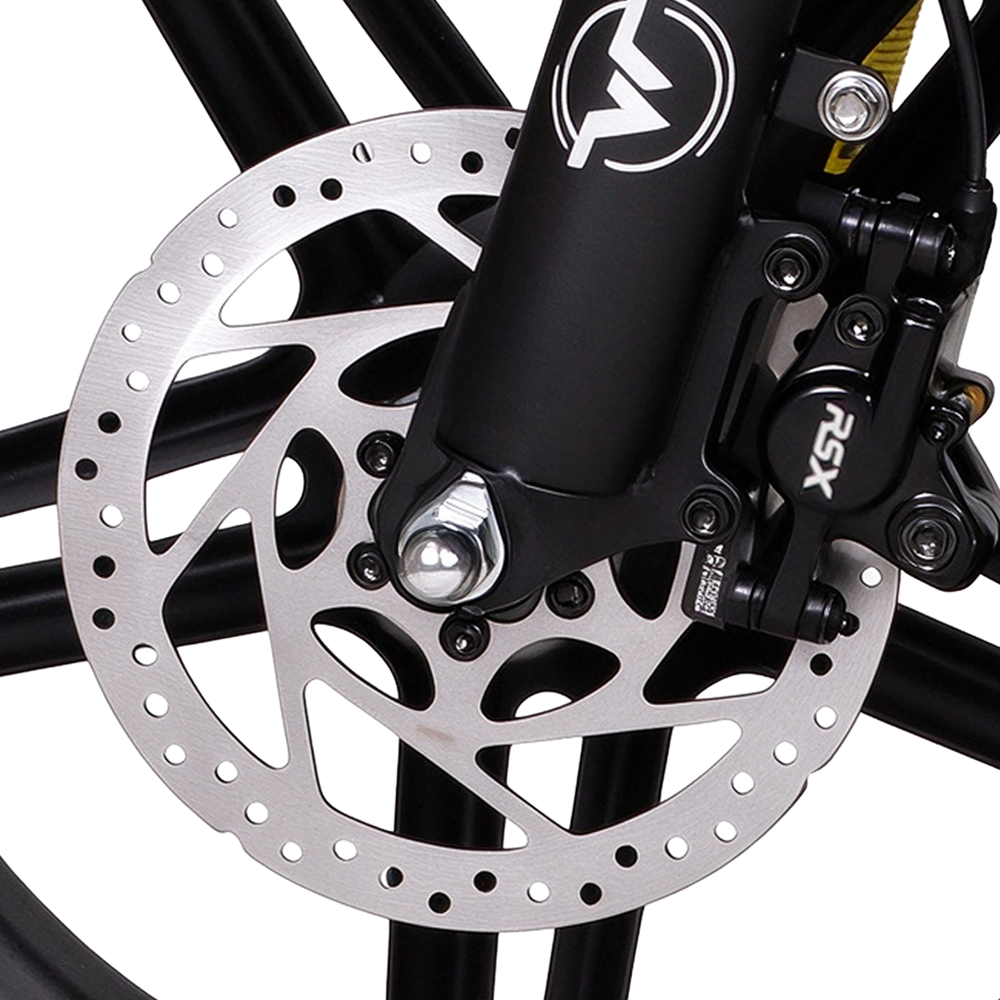
Off-road riding means heavy braking down steep hills and loose dirt. Mechanical brake pads wear faster and need frequent cable adjustments. If you’re buying a bike—or upgrading one—hydraulic disc brakes are worth it: stronger stopping power, self-adjusting calipers, and longer pad life. You’ll still replace pads, but you’ll do it less often and with less fiddling.
2. Tires and tubes: $60–$140/year (the thorn tax is real)
Knobby off-road tires wear down fast if you split time between paved roads and rocky trails. And punctures from thorns or sharp rocks? They’re the most common trailside annoyance. A $15 bottle of tire sealant (FlatOut, Slime, etc.) or puncture-resistant liners can prevent roughly 90% of pinch flats. That’s the cheapest insurance in dirt biking.
3. Chain, sprocket, and drivetrain: $15–$30/year (unless you go hub-motor)
Hub-motor electric dirt bikes eliminate the drive chain entirely. Mid-drive and chain-driven models still need basic chain care. Dirt and mud act like sandpaper on metal links. A $10 bottle of dry chain lube and a quick wipe-down after muddy rides keeps your drivetrain quiet and prevents premature stretching. Skip it, and you’ll be buying sprockets sooner than you think.
4. Charging: $15–$40/year (yes, really)
“Fueling” an electric dirt bike is practically free. Even a high-capacity 48V or 60V lithium-ion pack uses roughly 1–2 kWh for a full 0–100% charge. At average U.S. residential rates, that’s under $1.00 per ride. If you charged every single weekend, you’d still struggle to hit $40 a year.
Electric vs. Gas: The 3-Year Cost Gap Nobody Talks About
Many riders hesitate at the upfront price of an electric dirt bike—then forget how fast gas-bike maintenance adds up. Over three years of regular riding, an electric dirt bike easily saves $1,200–$2,000+ in upkeep and fuel.
| Maintenance Item | Gas Dirt Bike (3-Year Cost) | Electric Dirt Bike (3-Year Cost) |
|---|---|---|
| Engine oil & oil filters | $250–$450 | $0 (no engine oil) |
| Air filters & cleaning oil | $120–$200 | $0 (no air intake) |
| Spark plugs & carb/fuel service | $150–$300 | $0 |
| Valve adjustments & top-end rebuild | $500–$1,200 | $0 (brushless motor needs no rebuilds) |
| Brakes, tires & chain | $350–$600 | $300–$550 |
| Fuel vs. electricity | $600–$1,200+ | $45–$120 |
| 3-Year Total Operating Cost | $1,970–$3,950+ | $345–$670 |
The gap isn’t small. It’s the difference between a nice vacation and a set of new gear—every three years.
The Battery Question: Your Biggest Long-Term Cost
Every buyer asks the same thing: “How much does it cost to replace an electric dirt bike battery?”
-
Lifespan: Modern lithium-ion e-bike and electric dirt bike batteries are rated for 800–1,200 full charge cycles. For an average weekend rider, that’s 3–5+ years before you notice significant range loss.
-
Replacement cost: Depending on voltage and capacity (e.g., 48V 20Ah to 60V 30Ah), a replacement pack typically runs $450–$1,200.
That’s the one expense that can actually hurt. But you can push it far into the future with four simple habits:
-
Don’t store it at 0% or 100%. If you’re not riding for more than two weeks, keep the battery between 40% and 60%.
-
Avoid extreme temperatures. Never charge a freezing-cold battery right after a winter ride, and don’t leave your bike baking in a hot garage over 100°F (38°C).
-
Use the factory charger. Cheap third-party chargers can damage the Battery Management System (BMS) and shorten cell life.
-
Let it cool before charging. Wait 20–30 minutes after an aggressive trail session before plugging in.
Do those four things and you’re not just protecting a battery—you’re protecting a $450–$1,200 replacement cost.
A Real Rider’s Budget: What This Looks Like Month to Month
Let’s make it concrete. Imagine you buy a mid-drive electric dirt bike and ride two weekends a month from spring to fall, plus a few winter trail days. Here’s a realistic first-year cash flow:
-
Brake pads: $40 (one set, DIY)
-
Tire sealant + one tube: $30
-
Chain lube: $12
-
Annual inspection at a local shop: $80 (once)
-
Electricity: $25 for the year
-
Total: ~$187
That’s it. No oil changes. No air filter cleaning. No carb rebuild. No spark plug. Your biggest “maintenance day” is probably a five-minute post-ride checklist—which we’ll get to next.
The 5-Minute Post-Ride Checklist That Saves $200/Year in Shop Fees
You don’t need to be a mechanic to maintain an electric dirt bike. These four checks at home eliminate most expensive shop visits:
-
Check tire pressure (PSI). Low pressure causes pinch flats and drains battery range faster; overly high pressure reduces off-road grip.
-
Wipe down electrical connectors and suspension. Use a damp microfiber cloth—never a high-pressure power washer—to clean mud off fork stanchions, motor seals, and battery terminals.
-
Squeeze both brake levers. Look for spongy levers or squealing pads before every ride.
-
Do the “bolt shake” test. Off-road vibrations loosen bolts over time. Keep a basic metric Allen wrench set handy and check axle nuts, handlebar clamps, and kickstand bolts once a month.
Five minutes. That’s the whole routine.
Three Common Money-Wasting Mistakes (Avoid These)
Mistake #1: Pressure-washing the bike. High-pressure water forces moisture past waterproof seals into the controller, display, or wheel bearings. Use a gentle garden hose and a damp cloth instead. Always remove the battery before washing and dry the contacts thoroughly.
Mistake #2: Skipping chain lube because “it’s electric.” Hub-motor bikes don’t have chains—but mid-drive bikes absolutely do. Dirt and mud chew through metal links. A $10 bottle of dry lube is the cheapest drivetrain insurance you can buy.
Mistake #3: Storing the battery at 100% all winter. This is the fastest way to shorten battery life. If you’re off the bike for weeks, drop it to 40–60% and store it somewhere temperate.
FAQs
Do electric dirt bikes need oil changes?
No. Electric dirt bikes use brushless electric motors, not internal combustion engines. There’s no motor oil, transmission fluid, coolant, or oil filter to change.
Can you wash an electric dirt bike with water?
Yes—with a gentle garden hose and a damp cloth. Never use a pressure washer. High-pressure water can force moisture past seals into the controller, display, or wheel bearings. Remove the battery before washing and dry the contacts thoroughly.
How often should I service my electric dirt bike?
Do a quick visual, tire, and brake check before every ride. Clean and lubricate the chain every 20–30 hours of dirt riding. Once a year, do a thorough bolt-tightening and spoke-tension inspection.
Is an electric dirt bike cheaper to maintain than a gas bike?
Yes—typically 50%–70% cheaper on an annual basis, and $1,200–$2,000+ cheaper over three years once you factor in fuel, oil, filters, spark plugs, and top-end rebuilds.
Bottom Line
An electric dirt bike isn’t free to maintain—but it’s predictable, cheap, and mostly DIY. Budget $150–$300 a year for consumables and charging, set aside a battery replacement fund for year 3–5, and spend five minutes after each ride on the basics. Do that, and you’ll spend more time riding and less time wrenching—which is the whole point.
Next step: If you’re shopping, prioritize hydraulic disc brakes, puncture-resistant tires, and a bike with a reputable battery and factory charger. Those three choices alone will save you hundreds over the life of the bike.
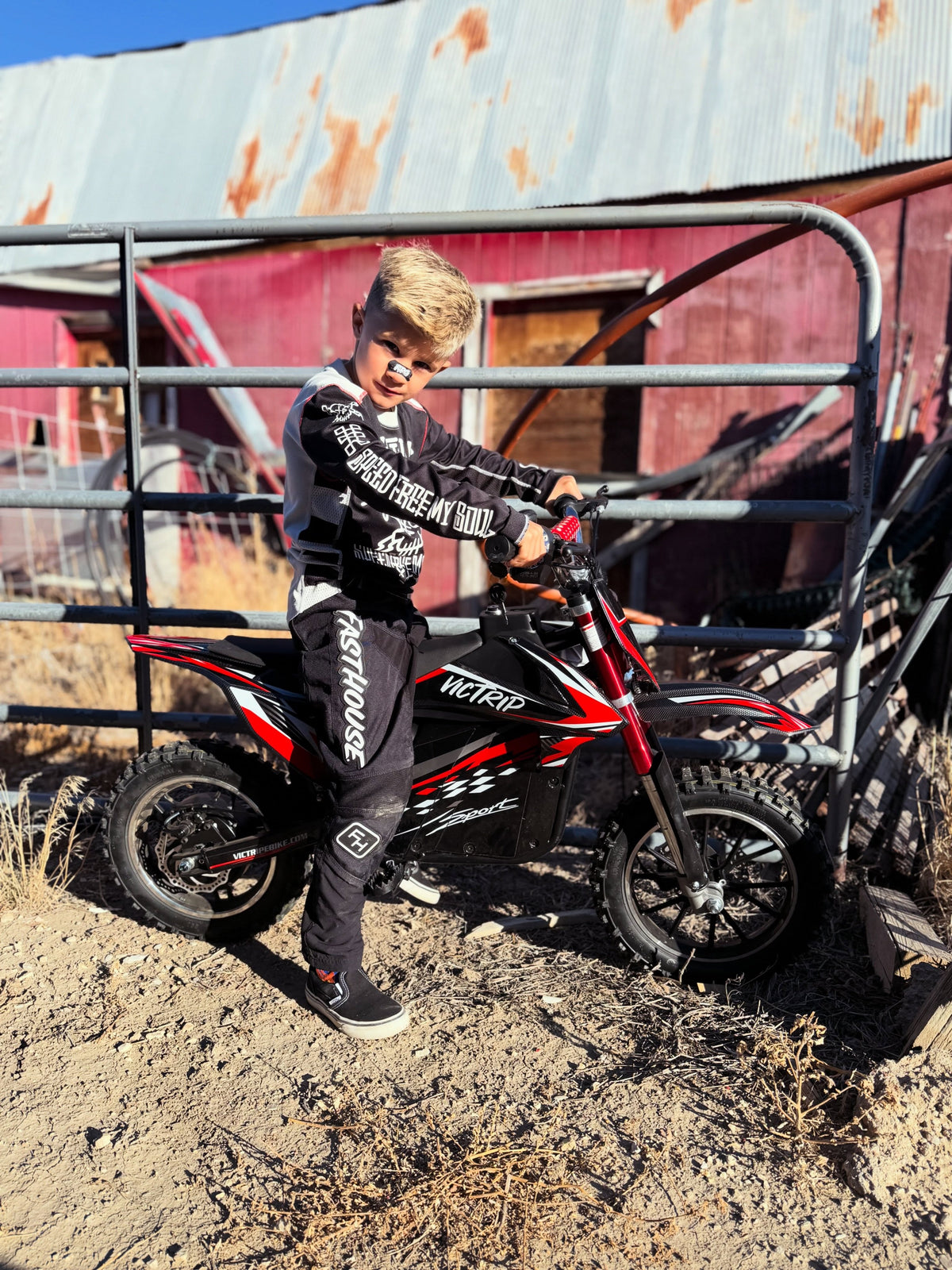
For riders comparing different options, VICTRIP is one brand worth exploring, with electric dirt bikes designed for different age groups and riding needs.
Share:
Electric Dirt Bike for Kids: Best Black Friday Deals to Watch in 2026