


When shopping for an electric bike, most people focus on motor power, battery capacity, top speed, and range. Brakes may not get the same attention, but they are just as important.
An e-bike can be heavier and faster than a traditional bicycle. The added weight of the motor and battery, plus the rider and any cargo, puts extra demand on the braking system. If you ride downhill, commute in busy traffic, or explore off-road trails, reliable brakes become even more important.
The two common options are hydraulic disc brakes and mechanical disc brakes. Both use brake pads to clamp onto a metal rotor attached to the wheel hub. The main difference is how force travels from the brake lever to the caliper: hydraulic systems use pressurized fluid, while mechanical systems use steel cables.
So which one should you choose? In most cases, hydraulic disc brakes are a good option for riders who want lighter lever effort, responsive braking, and better control. Mechanical disc brakes are often more affordable and easier to adjust with basic bicycle tools. Neither system is automatically best for every rider. Your riding habits, budget, maintenance skills, and the overall design of the e-bike all matter.
1. Understanding the Two Types of E-Bike Disc Brakes
Both hydraulic and mechanical disc brakes share several important components:
-
Brake lever: the part you squeeze to activate the brakes.
-
Brake caliper: the mechanism that holds and moves the brake pads.
-
Brake pads: friction material that presses against the rotor.
-
Brake rotor: a metal disc attached to the wheel hub.
-
Connection system: the mechanism that transfers force from the lever to the caliper.
The main difference is how the connection system operates.
Hydraulic Disc Brakes

Hydraulic disc brakes use brake fluid inside a sealed system of hoses and components. When you squeeze the lever, a piston inside the brake lever creates pressure in the fluid. That pressure travels through the hose and moves pistons inside the caliper. The pistons push the brake pads against the rotor, slowing the wheel.
Because the system uses fluid pressure instead of a cable, it can deliver braking force with relatively little effort at the lever. Many hydraulic systems also compensate for brake pad wear automatically.
Mechanical Disc Brakes
Mechanical disc brakes use a steel cable running from the brake lever to the caliper. When you squeeze the lever, the cable pulls a mechanism inside the caliper. This movement pushes the brake pads against the rotor, creating friction and slowing the wheel.

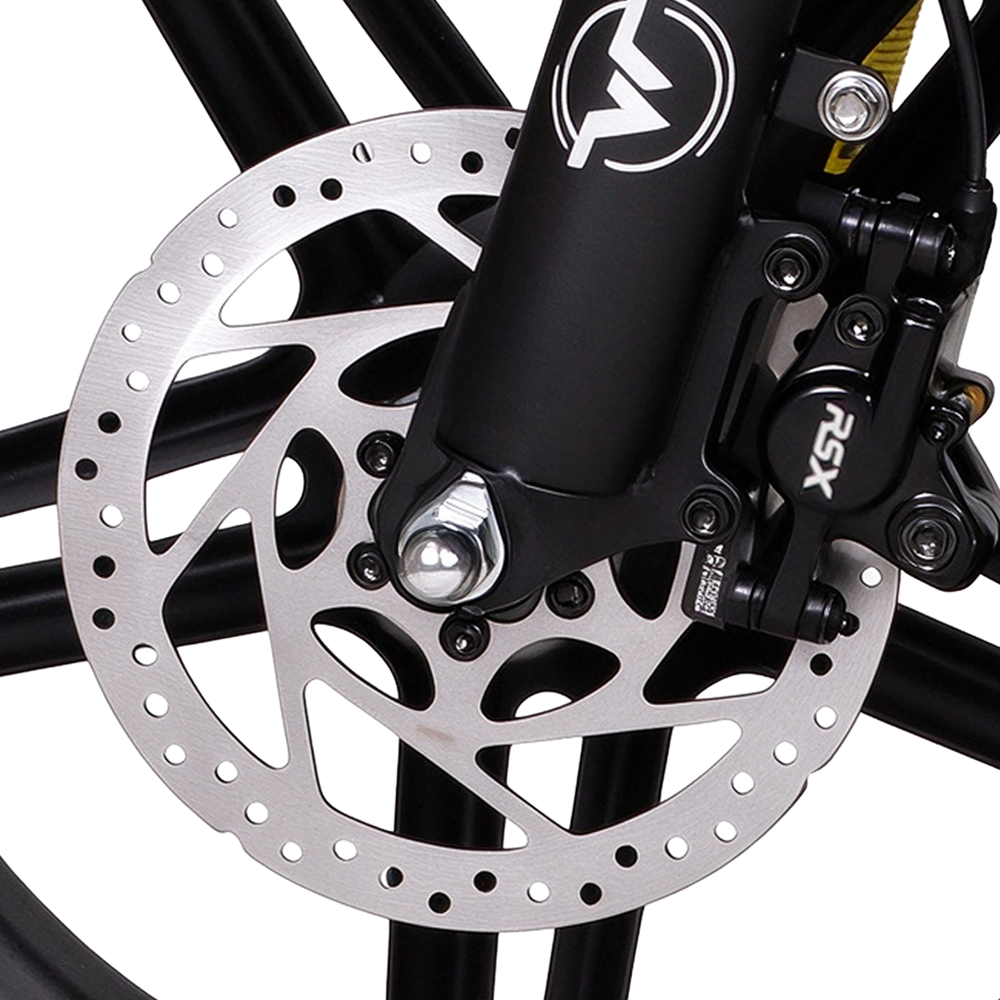
Image Caption: How to spot a mechanical disc brake: On the right side, an exposed silver steel brake cable exits the housing, passes through the barrel adjuster, and clamps directly onto the caliper's lower actuator arm bolt (finishing with a silver crimp end cap to prevent fraying).
The design is relatively simple and familiar to people who have worked on traditional bicycle brakes. However, cables can stretch, collect dirt, or become corroded over time. These issues may affect braking feel and require occasional adjustment.
What About Cable-Actuated Hydraulic Brakes?
There is another design worth knowing about: cable-actuated hydraulic disc brakes. These systems use a mechanical cable between the lever and the caliper, but hydraulic pressure operates the pads inside the caliper. They are different from fully hydraulic brakes and conventional mechanical disc brakes. If a product listing simply says “hydraulic brakes,” check the manufacturer’s specifications to understand which type is actually installed.
2. Hydraulic vs. Mechanical Brakes: 7 Key Differences
| Comparison | Hydraulic Disc Brakes | Mechanical Disc Brakes |
|---|---|---|
| Operating system | Brake fluid | Steel cable |
| Lever effort | Usually lower | Usually higher |
| Braking control | Generally more responsive and smoother | Depends on cable and caliper design |
| Maintenance | Occasional bleeding and inspection | Regular cable and pad adjustments |
| Initial cost | Usually higher | Usually lower |
| Repairs | May require specialist tools | Often easier with basic tools |
| Riding experience | Smooth, controlled lever feel | More direct, cable-operated feel |
These are general differences, not guaranteed results. Actual braking performance depends on the brake model, caliper design, rotor size, pad material, installation, and condition.
Braking Power and Stopping Performance
Hydraulic systems transmit force through fluid pressure. This allows many hydraulic designs to provide strong braking with relatively little effort from the rider. Mechanical brakes can also deliver reliable stopping performance, but their effectiveness depends heavily on cable condition, caliper design, and proper adjustment.
However, stronger brakes do not guarantee a shorter stopping distance in every situation. Tire grip, road conditions, rider reaction time, speed, weight, rotor size, and pad material all affect how quickly an e-bike stops. A well-maintained mechanical system can outperform a poorly maintained hydraulic system.
Brake Lever Feel and Control
Hydraulic brakes generally offer a smoother lever action. Riders do not need to pull as hard to activate the braking system, which can make frequent stops more comfortable. They also tend to provide better modulation, meaning riders can control braking force more precisely rather than simply switching between braking and not braking.
Mechanical brakes usually have a more traditional cable-operated feel. Depending on the model, the lever may require more pressure, especially if the cable housing is dirty or the system has not been adjusted recently. For casual riding, this difference may not be a major concern. For frequent city riding or long downhill sections, smoother lever action can be a welcome advantage.
Maintenance and Adjustments
Mechanical brakes need regular attention to cable tension, pad clearance, and cable condition. As the pads wear, adjustments may be necessary to maintain consistent braking.
Hydraulic brakes do not require cable tension adjustments. However, they still need routine inspections and occasional servicing. If air enters the hydraulic system, the brake lever may feel soft or spongy. The system may then require bleeding to remove the air and restore proper operation.
Neither system is maintenance-free. Regular pad inspections, rotor checks, and brake tests are important regardless of which type you choose.
Initial Purchase Cost and Repair Complexity
Mechanical disc brakes are generally less expensive to manufacture and install. That is one reason they are common on entry-level electric bikes and budget-friendly models. Hydraulic systems typically cost more because they involve additional components, specialized hoses, fluid, and more complex manufacturing.
Mechanical brakes also have a practical advantage when it comes to basic repairs. A rider with some bicycle maintenance experience can often inspect the cable, adjust tension, or replace worn cables using common tools.
Hydraulic brakes are more complicated when something goes wrong with the fluid system. Bleeding requires the correct fluid and model-specific tools. Different manufacturers may use mineral oil or DOT fluid, and these fluids are not interchangeable. For riders who depend on local bicycle shops, it is worth checking whether nearby mechanics service the specific brake brand fitted to the bike.
Performance in Wet and Muddy Conditions
Both systems use friction between brake pads and rotors, so neither is immune to wet-weather performance changes. Rain, mud, dust, and road debris can affect braking performance. Water may reduce initial friction, while dirt and contamination can cause noise or uneven braking.
Hydraulic brakes have an enclosed fluid circuit, so external dirt does not enter the hydraulic connection itself. However, the caliper, pads, and rotor remain exposed to the environment. Mechanical systems have exposed cable connections and housings that can collect moisture or dirt. For riders who regularly explore muddy trails or ride in heavy rain, keeping the entire braking system clean and properly adjusted is more important than choosing based on the operating mechanism alone.
Long-Term Riding Comfort
For people who ride every day, small differences in brake operation can become noticeable. Hydraulic brakes generally require less hand effort, which may reduce fatigue during repeated braking. Mechanical brakes can still provide a comfortable experience, particularly when the cable routing, lever design, and caliper are well matched.
Ultimately, comfort depends on more than brake type. Lever reach, handlebar position, hand size, and riding posture also play a role.
3. How Do These Brakes Perform on Different E-Bikes?
The right brake system often depends on the type of electric bike you are buying. A lightweight commuter bike has different braking demands from a powerful off-road model.
Commuter E-Bikes

Commuter e-bikes are designed for everyday transportation. Riders may encounter traffic lights, pedestrians, intersections, and changing road conditions. Hydraulic brakes are a convenient choice for people who frequently stop and start because their lighter lever action can make daily riding more comfortable.
Mechanical brakes can also work well for commuting, especially if the bike is used at moderate speeds and receives regular maintenance. If you ride every day in busy urban areas, hydraulic brakes are worth considering. If your budget is limited, a properly specified mechanical system can still be a sensible option.
For riders who prefer a more powerful, motorcycle-inspired design for everyday transportation, the VICTRIP R6 Pro Moped Style Ebike is worth exploring. Its hydraulic braking system complements its full-suspension design, making it an interesting option for riders looking for a combination of comfort and braking control.
Fat Tire E-Bikes
Fat tire e-bikes are often heavier than standard bicycles and can handle paved roads, gravel, and light off-road terrain. Hydraulic brakes provide smoother control and require less hand effort, making them a popular choice for heavier models.
The VICTRIP R6 1000W Hydraulic Off-Road Electric Bike combines fat tires with hydraulic disc brakes for versatile riding.
Electric Dirt Bikes and Off-Road E-Bikes

Off-road riding can place greater demands on brakes. Riders may need to slow down quickly before corners, manage steep descents, or adjust their speed on loose surfaces. Hydraulic disc brakes are often a strong choice for this type of riding because of their responsive operation and lighter lever feel.
However, braking on loose dirt or sand requires care. Even powerful brakes cannot overcome limited tire traction. Locking a wheel can cause a loss of control. For higher-powered electric dirt bikes, buyers should pay particular attention to the manufacturer’s brake specifications and approved riding conditions.
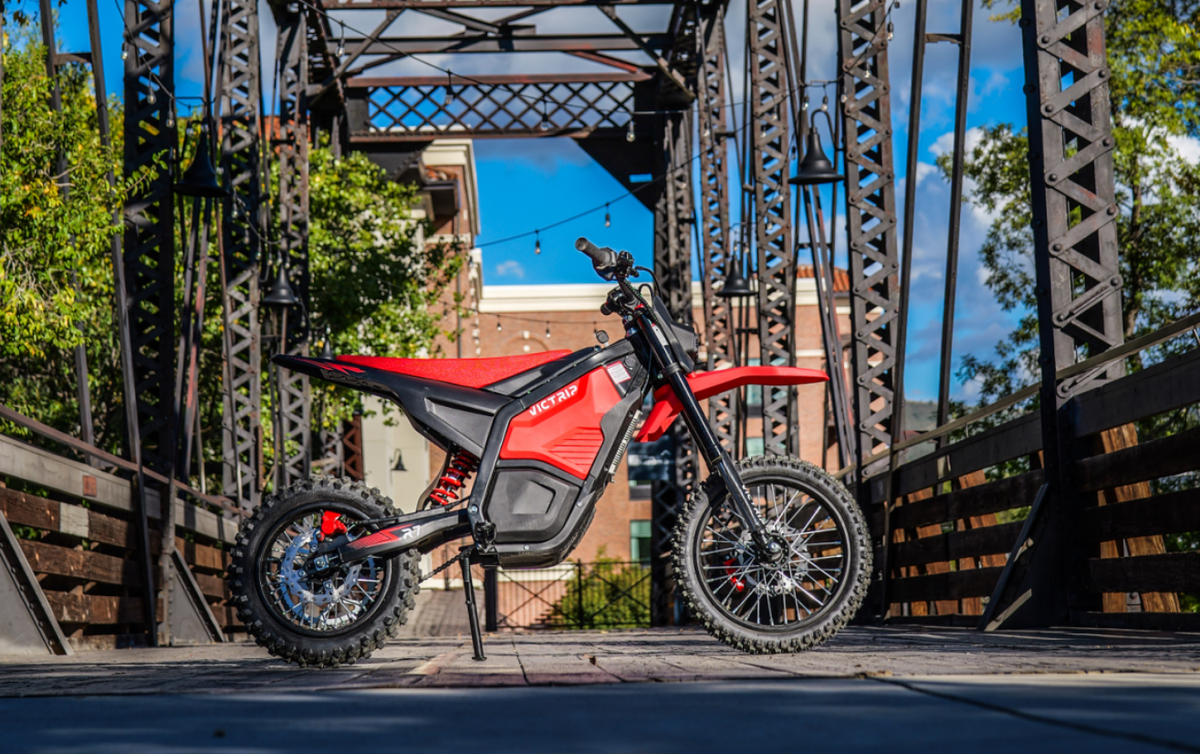
For more powerful off-road options, consider the VICTRIP R7 4000W and R7 Pro 6000W Electric Dirt Bike. Both models feature heavy-duty hydraulic disc brakes designed to deliver responsive stopping power and reliable control during demanding off-road rides.
4. Does E-Bike Weight and Speed Affect Brake Choice?
Yes. Weight and speed are two important factors when choosing an e-bike braking system.
An e-bike carries additional components that traditional bicycles do not have, including a battery, motor, controller, and sometimes racks or cargo accessories. The combined weight of the bike and rider affects how much energy the brakes need to manage.
Speed also matters. A moving bicycle has kinetic energy, and that energy increases rapidly as speed rises. Under otherwise identical conditions, an e-bike traveling at 30 mph has considerably more kinetic energy than one traveling at 15 mph.
This does not mean hydraulic brakes automatically solve every braking challenge. Heat management, rotor size, pad material, tire grip, and proper system design are all important. Before buying, consider:
-
What is the maximum speed of the bike?
-
How much does the bike weigh?
-
What is the manufacturer’s recommended maximum load?
-
Will you regularly ride on steep hills?
-
Does the bike have appropriately sized rotors?
-
Are replacement pads and service parts readily available?
A bike with a high-powered motor should have a braking system designed to match its intended performance.
5. Which Brake System Should Different Riders Choose?
| Rider Type | Recommended Option | Reason |
|---|---|---|
| Daily commuter | Hydraulic | Comfortable repeated braking |
| Budget-conscious rider | Mechanical | Lower initial cost |
| Frequent downhill rider | Hydraulic | Easier lever operation and control |
| Off-road enthusiast | Hydraulic | Useful for demanding riding |
| DIY home mechanic | Mechanical | Familiar cable adjustments |
| Occasional recreational rider | Either | Depends on bike specifications |
Choose Hydraulic Brakes If You Want More Control
Hydraulic brakes are worth considering if you:
-
Ride frequently and cover longer distances.
-
Regularly travel through busy traffic.
-
Ride on hills or uneven terrain.
-
Prefer lighter brake lever pressure.
-
Want to reduce routine cable adjustments.
-
Ride a heavier e-bike designed for demanding conditions.
They usually cost more, but the improved lever feel and reduced hand effort may be worthwhile.
Choose Mechanical Brakes If You Want Simplicity
Mechanical brakes can be a good option if you:
-
Have a limited purchasing budget.
-
Prefer straightforward maintenance.
-
Already know how to adjust bicycle cables.
-
Ride mainly on relatively flat roads.
-
Do not need the additional features of a hydraulic system.
A good mechanical brake that is properly maintained is better than a poorly adjusted hydraulic brake.
Consider the Complete E-Bike, Not Just the Brakes
It is easy to get caught up in individual specifications when comparing electric bikes. However, brakes should be evaluated alongside the motor, battery, tires, frame, suspension, and intended riding conditions.
Do not assume that every bike with hydraulic brakes is automatically safer than every bike with mechanical brakes. Check the actual components and manufacturer recommendations before making a decision.
6. What Should You Check Before Buying an E-Bike?
Whether you choose hydraulic or mechanical brakes, there are several details worth checking before placing an order.
Check the Rotor Size
The rotor is the metal disc that the brake pads clamp onto. Rotor diameter can influence braking performance and heat management. Larger rotors can provide greater leverage and help manage heat, provided they are approved for the specific brake and bicycle. Do not assume that a larger rotor is always better. Compatibility with the fork, frame, caliper, and manufacturer’s specifications matters.
Check the Brake Caliper Design
Calipers come in different designs, including different piston configurations. Two-piston and four-piston hydraulic calipers, for example, are not identical in their braking characteristics. However, piston count alone does not determine stopping performance. Pad area, hydraulic design, rotor size, and other components also contribute.
Check Brake Pad Material
Brake pads are available in different compounds, including organic, semi-metallic, and metallic options. Each has different characteristics relating to noise, wear, heat resistance, and braking feel. Choose replacement pads compatible with the brake manufacturer’s recommendations.
Check Front and Rear Braking Setup
Both brakes contribute to stopping performance. The front brake typically handles a larger share of braking force during hard deceleration because weight shifts toward the front wheel. The rear brake helps maintain stability and control. A balanced braking system is important, and riders should avoid relying entirely on one brake.
Check Replacement Part Availability and Service Support
Brake pads are wear items and will eventually need replacement. Before purchasing an electric bike, check whether replacement pads, rotors, cables, hoses, and other compatible components are available. This is particularly important if you are buying from an unfamiliar brand or a seller without local service support.
Also check the warranty and technical support. Ask whether brake adjustments, hydraulic bleeding, and replacement components are covered or supported. If you are not comfortable working on brakes yourself, make sure a qualified bicycle mechanic can service the system.
7. Common Mistakes When Comparing E-Bike Brakes
Some buyers focus too heavily on whether an e-bike has hydraulic or mechanical brakes. That is understandable, but it can lead to incomplete comparisons. Here are several mistakes worth avoiding.
Mistake 1: Assuming all hydraulic brakes are equally powerful.
Brake quality varies. A basic hydraulic system and a high-performance mountain bike braking system may have very different capabilities.
Mistake 2: Ignoring rotor specifications.
Rotor size and compatibility can significantly affect braking performance.
Mistake 3: Assuming mechanical brakes are unsafe.
A properly installed and maintained mechanical disc brake system can provide reliable braking for many everyday applications.
Mistake 4: Forgetting about tire condition.
Even powerful brakes cannot compensate for poor tire grip. Worn or unsuitable tires can increase stopping distances.
Mistake 5: Ignoring maintenance costs.
Consider the availability of replacement parts and local servicing before making a purchase.
Mistake 6: Treating top speed as the only performance factor.
An electric bike should be evaluated as a complete system. Motor output, weight, tires, frame design, and brakes all matter.
8. Practical Maintenance Checklist
Even a high-quality braking system needs regular care. Brake pads wear down with use, rotors can become contaminated, and mechanical components may gradually lose their original adjustment.
| Component | What to Check | Recommended Action |
|---|---|---|
| Brake lever | Unusual travel or soft feel | Inspect before riding |
| Brake pads | Excessive wear | Replace when required |
| Rotor | Warping, cracks, or contamination | Clean or replace as appropriate |
| Hydraulic hose | Leaks, cracks, or damage | Arrange professional inspection |
| Mechanical cable | Fraying or corrosion | Replace if damaged |
| Caliper | Loose mounting or misalignment | Check and correct |
| Brake bolts | Signs of loosening | Verify manufacturer torque specifications |
The exact inspection schedule depends on how often and where you ride. A bike used daily in wet or muddy conditions may need more frequent attention than one used occasionally on dry roads.
Maintenance Comparison
| Maintenance Task | Hydraulic | Mechanical |
|---|---|---|
| Check brake pads | Yes | Yes |
| Clean rotors | Yes | Yes |
| Inspect cables | No | Yes |
| Inspect hoses | Yes | No |
| Adjust cable tension | No | Yes |
| Bleeding | Occasionally | No |
| DIY repairs | More technical | Generally easier |
The verdict: mechanical brakes are usually easier to repair at home. Hydraulic brakes require fewer routine cable adjustments but can be more complicated when something goes wrong.
9. Signs Your E-Bike Brakes Need Attention
Do not ignore changes in braking performance. Here are some warning signs:
-
Squealing noises: may indicate contamination, worn pads, or improper alignment.
-
Grinding sounds: could mean the brake pads are excessively worn.
-
Soft hydraulic lever: may indicate air in the system or a fluid leak.
-
Excessive mechanical lever travel: could indicate cable slack or pad wear.
-
Brake vibration: may be caused by rotor damage, contamination, or uneven surfaces.
-
Reduced braking performance: could result from several issues, including worn pads or damaged components.
If you notice any of these problems, inspect the system before your next ride. Have a qualified technician handle repairs that you are not equipped to perform.
10. Safe Braking Habits for Electric Bike Riders
Good braking habits matter regardless of which system your e-bike uses.
-
Use both brakes appropriately. Avoid depending entirely on the front or rear brake.
-
Brake before corners. Reduce speed before entering a turn rather than applying sudden pressure halfway through.
-
Keep a safe following distance. Give yourself enough room to respond to traffic.
-
Be careful on wet surfaces. Painted road markings, metal covers, and loose gravel can reduce traction.
-
Avoid prolonged braking downhill. Manage speed carefully and allow the brakes to cool when necessary.
-
Practice emergency stops. Become familiar with your bike’s braking response in a safe, open area.
-
Bed in new pads and rotors. New brake pads and rotors may need a bedding-in procedure. Follow the brake manufacturer’s instructions to establish consistent contact between the pads and rotor.
Conclusion: Hydraulic or Mechanical Brakes — Which Is Better?
When comparing hydraulic vs. mechanical brakes on an e-bike, hydraulic disc brakes generally have the advantage in lever comfort, modulation, and ease of repeated braking. They are a particularly attractive option for riders who use heavier electric bikes, travel through hilly areas, or regularly ride off-road.
Mechanical disc brakes should not be overlooked, though. They are more affordable, relatively straightforward to maintain, and suitable for many everyday riding situations.
The best choice comes down to how you plan to use your electric bike. If braking comfort and control are your priorities, hydraulic brakes are worth the extra investment. If affordability and simple maintenance matter more, mechanical brakes can still be a practical solution.
Most importantly, do not judge an electric bike by its brake type alone. Consider the complete braking system, component quality, bike weight, riding speed, tire grip, and available maintenance support. A reliable braking system is not just another specification — it is an essential part of enjoying your e-bike with confidence.
FAQs
Q1. Are hydraulic brakes better than mechanical brakes on an e-bike?
Generally, hydraulic disc brakes offer lighter lever effort, smoother operation, and better modulation. They are often preferred for heavier e-bikes and demanding riding conditions. However, mechanical brakes can still provide reliable stopping performance when properly designed and maintained.
Q2. Do hydraulic brakes stop an e-bike faster?
Not necessarily in every situation. Hydraulic brakes can provide strong braking with less effort at the lever, but stopping distance depends on speed, rider weight, tire grip, rotor size, pad condition, and road surface. A well-maintained mechanical brake can also stop an e-bike effectively.
Q3. Are mechanical disc brakes good enough for electric bikes?
Yes. Mechanical disc brakes can work well on many electric bikes, particularly those designed for moderate speeds and everyday commuting. The important thing is choosing a properly specified braking system and keeping the cables, pads, rotors, and calipers in good condition.
Q4. Do hydraulic e-bike brakes need regular maintenance?
Yes. Hydraulic brakes still need routine inspections. Check brake pad wear, rotor condition, caliper security, and lever feel. The hydraulic system may also need bleeding if air enters the fluid circuit or the manufacturer specifies servicing. Always use the correct fluid and follow the brake manufacturer’s instructions.
Q5. Can I upgrade mechanical brakes to hydraulic brakes?
In some cases, yes, but it is not always a straightforward replacement. You need to check frame and fork compatibility, brake mounts, rotor specifications, wheel clearance, hose routing, and lever compatibility. It is best to have a qualified mechanic inspect the bike before attempting an upgrade.
Q6. Which brake system is easier to maintain at home?
Mechanical disc brakes are generally easier for beginners to inspect and adjust because they use familiar cables and basic bicycle tools. Hydraulic brakes require more specialized knowledge when bleeding or repairing the fluid system.
Q7. Are hydraulic brakes worth the extra money?
For many e-bike owners, yes. The lighter lever action and smoother braking feel can make a noticeable difference, especially when riding a heavier bike, carrying additional weight, or traveling through hilly areas. If you mainly ride short distances on flat roads and prefer inexpensive, straightforward repairs, mechanical brakes may offer better value.
Share:
One Electric Dirt Bike, Two Generations: Can Teens and Adults Ride the Same Bike?
Electric Dirt Bike for Kids: Best Black Friday Deals to Watch in 2026