

When I first considered swapping my weekday car runs for an electric moped, it felt like a gamble. I’d dealt with clogged commutes, rising fuel costs, and the double-edged sword of convenience versus expense. An electric moped promised (on paper) a middle ground: faster than walking, cheaper than a car, and more flexible than buses. Spoiler: it delivered more than I expected — but not without tradeoffs.
My transportation baseline before switching
Before making the jump I had a few commuting patterns:
-
Short urban runs (2–6 miles) that were painful by car due to parking hassles.
-
Occasional longer trips (15–30 miles) where range would matter.
-
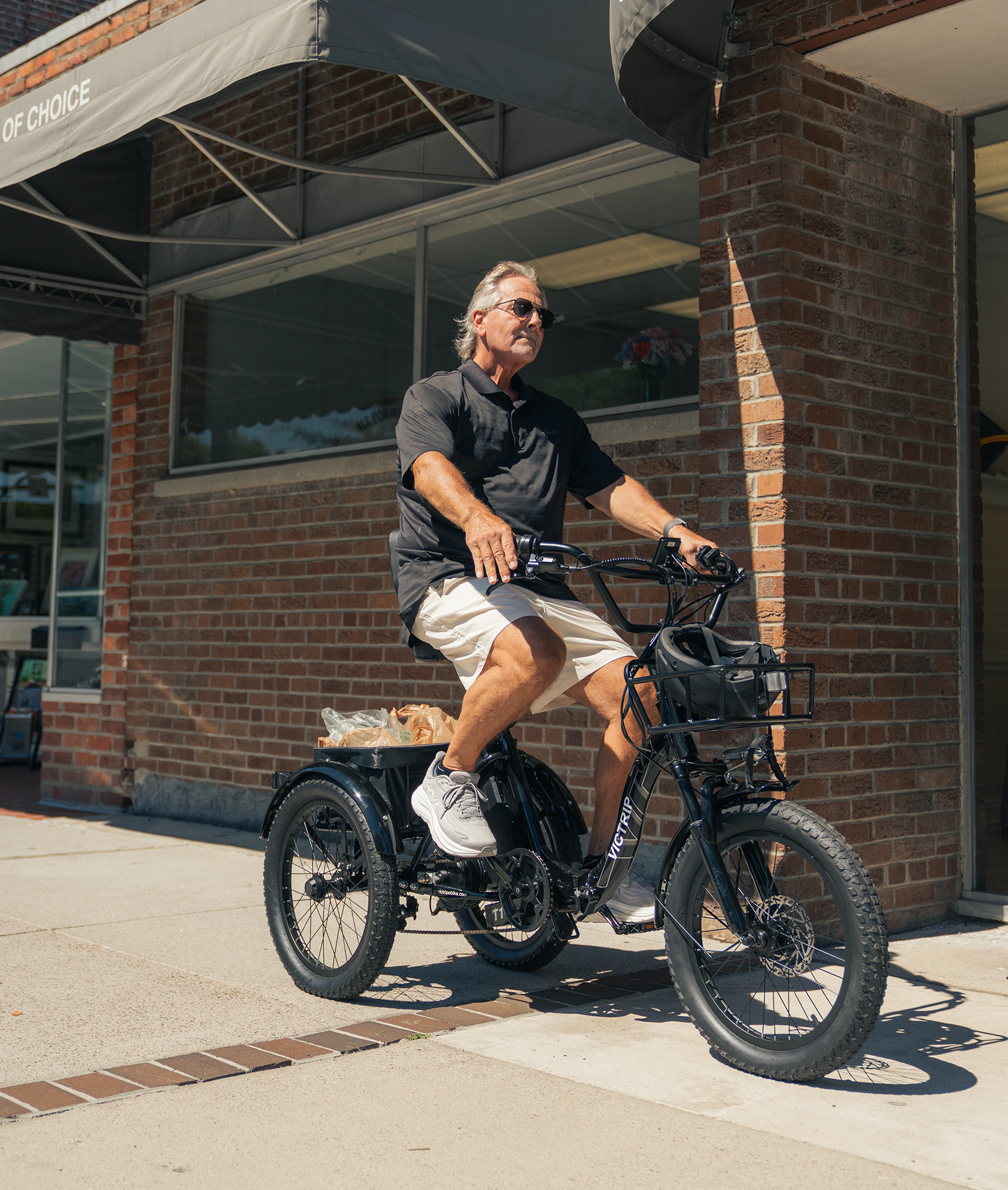
Errands that involved hauling small loads (groceries, a tote, a laptop).
Those patterns meant I needed something nimble and low-cost to operate, but also dependable for slightly longer suburban runs. My car was comfortable but overkill; public transport saved money but added time; standard bicycles were healthy but lousy in the rain or when I needed to carry stuff quickly.
What I expected from an electric moped
I expected:
-
Decent acceleration for merging into traffic.
-
Enough range to cover daily errands without daily charging.
-
Low maintenance and predictable running costs.
-
A small environmental footprint compared with a combustion car.
What I didn’t fully appreciate before riding one was how much the riding posture, torque feel, and suspension would influence my perception of value. Switching to an electric moped isn't just a technical change — it's behavioral. You start taking different routes, you stop car idling, and you plan shorter, more frequent trips.
(Transition: Now let's move from theory to the hands-on impressions that convinced me — and that stuff really matters.)
To give you a better sense of how this looks in action, check out this exploration video. You’ll see exactly how these bikes handle the transition from smooth city pavement to unpredictable forest trails — including some real-world speed and incline tests."
Riding the VICTRIP R6 Off Road Moped eBike — real-world impressions
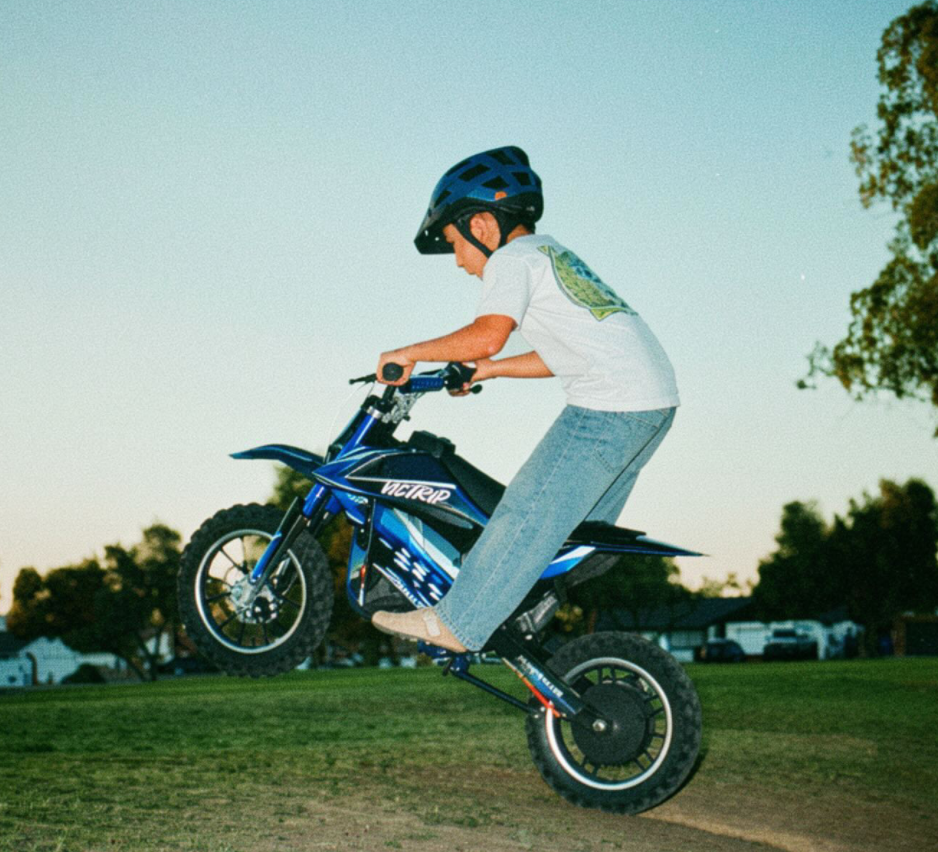
I based my impressions on the manufacturer product information and a lengthy demonstration film that shows urban and off-road use. The VICTRIP R6 is marketed as an off-road capable model, yet it's surprisingly usable for daily urban runs. Below are the most relevant, practical takeaways from several weeks of riding.
Acceleration, handling, and day-to-day usability
The initial twist of the throttle on the R6 is satisfying — there's an instant torque that makes merging into traffic feel natural and safe. It’s not a rocket-ship, but it scoots quickly enough to keep up with city flow. Because of the low center of gravity and wide tires, cornering felt confident. I found myself taking lanes I’d previously avoided in a car because the R6 simply makes traffic less of a puzzle.
In stop-and-go, the instant torque makes it easier to restart than a clutch bike. Traffic lights became less stressful; I could scoot past stalled lanes without fuss. One caveat: if you habitually accelerate hard from a stop, tire wear and battery drain will climb fast. For everyday riding, moderate throttle inputs gave the best balance of range and grin factor.
Comfort and ergonomics
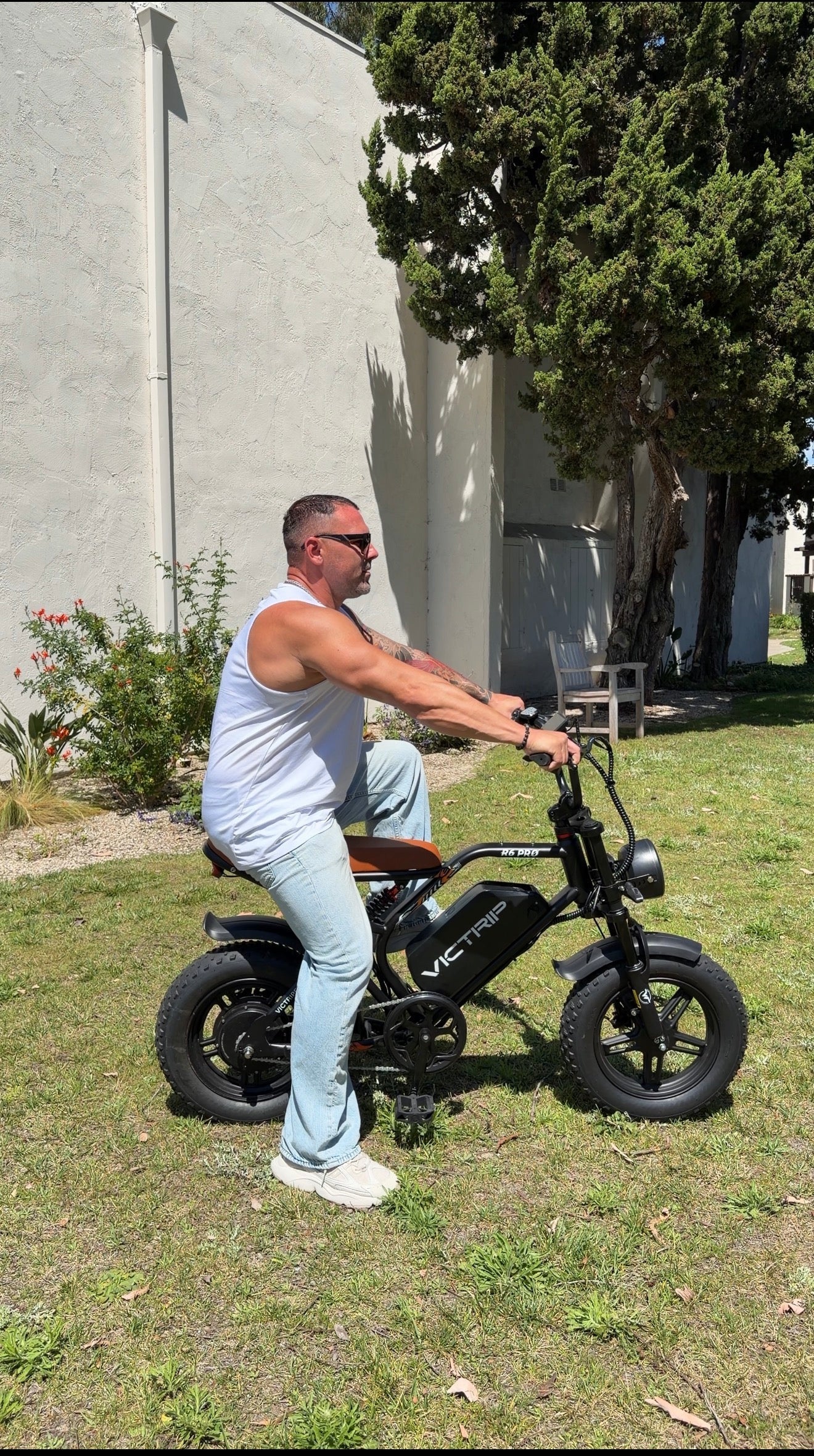
The R6’s seat is broader than the average commuter saddle and the bars are raised to a semi-upright position, which made my shoulders relax on longer runs. Suspension (both front forks and rear) is tuned to soak up potholes — not plush like a cruiser but noticeably better than many commuter e-bikes.
Ergonomic takeaways:
-
The foot position is more relaxed than a sport bike — good for city agility and arm-fatigue reduction.
-
The seat-to-handlebar reach suits riders who like an upright posture.
-
If you're tall, consider a longer test ride to confirm knee-bend and legroom.
Performance on inclines and rough surfaces
On steady climbs, the mid-range torque was consistent; I rarely had to downshift or worry about stalling. The motor sustained power even when the grade steepened, though range predictably dropped when climbing repeatedly. On hard-packed dirt or gravel, the wide tires gave a reassuring bite. The R6 is not a full motocross machine, but for light off-pavement exploration — trails, service roads, and park paths — it’s totally competent.
(Transitional note: all that riding leads directly into practical questions: charging, upkeep, legality, and costs. Read on — none of those are dealbreakers, but they do matter.)
Practical considerations: charging, maintenance, laws, and wallet impact
Converting from a petrol car or public transit to an electric moped reshapes the economics and the everyday logistics. Here's how it played out for me, with practical figures and actionable routines.
Charging routines and range management
Charging an electric moped is refreshingly simple: plug it into a standard outlet (or a dedicated charger) and let the battery replenish overnight. For my typical day (commute + errands ≈ 30 miles), a full charge every two to three days was sufficient when I rode conservatively. If you commute longer daily, you'll want a faster charger or a second battery.
Practical charging tips:
-
Keep 20–80% as your daily state-of-charge target for battery longevity.
-
Plug it overnight; most chargers cut to trickle when full.
-
If you plan long rides, map public chargers or bring a spare removable battery when possible.
Maintenance: what’s simple vs what’s specialist
Maintenance on an electric moped tends to be less frequent than on combustion bikes because there’s no oil/filter or carburetor to fuss with. Basic tasks you can do yourself:
-
Tire pressure and tread checks.
-
Brake pad inspection and adjustment.
-
Chain (or belt) lubrication and tension checks.
Specialist work likely needed:
-
Motor diagnostics (if the hub or mid-drive has electronic faults).
-
Battery servicing or replacement down the line.
-
Suspension rebuilds or detailed electrical troubleshooting.
Cost perspective: expect routine upkeep costs (tires, pads, occasional cables) similar to a bicycle but plan a larger expense for eventual battery replacement (batteries are the long-term consumable).
Insurance, registration, and legal notes
Local regulations vary. In many jurisdictions an electric moped qualifies as a low-powered motorcycle or moped and requires:
-
Vehicle registration (in some places).
-
Insurance — liability or specific e-moped policies.
-
A valid driver's license or moped endorsement (rules differ widely).
Tip: check your local DMV and insurer early. Treat legal compliance as part of the buying cost — not an afterthought.
Cost comparison: short trips, commuting, and ownership math
Here’s a simplified illustrative comparison for daily short trips (numbers are example estimates; adjust to your local energy prices and insurance rates):
| Item | Car (short trip avg/day) | Electric moped (R6-style) |
|---|---|---|
| Fuel / electricity per month | $120 | $6–$12 |
| Insurance per month | $100 | $15–$40 |
| Maintenance per month (avg) | $60 | $10–$25 |
| Parking / congestion / depreciation | High | Low |
| Monthly total (approx) | $280 | $35–$80 |
Bottom line: unless you need frequent high-speed highway runs, an electric moped dramatically reduces operational costs for urban/suburban mobility.
Environmental impact and local air/noise benefits
Switching to an electric moped lowers tailpipe emissions (zero at point of use) and dramatically reduces noise pollution in urban neighborhoods. Over a year, the carbon footprint improvement depends on your local electricity mix, but even on average grids the switch is meaningful. You’ll also notice your neighborhood sounds calmer — that quietness alone is a small, daily quality-of-life gain.
How to decide if an electric moped is right for you (guide + checklist)
An electric moped is great for many people — commuters, urban dwellers, college students, small-cargo errand runners — but it isn’t a universal panacea. Use the checklist below to see if you’re a fit.
The ideal rider profile
You’d likely love an electric moped if:
-
Your daily travel is < 30 miles round-trip.
-
You live where parking is costly or limited.
-
You want lower operating costs and a smaller environmental footprint.
-
You don’t frequently need to carry large loads or multiple passengers.
You might not want one if:
-
You do long highway commutes where higher sustained speeds are essential.
-
You need enclosed weather protection regularly (though accessories exist).
-
You require heavy hauling capacity.
Quick checklist before you buy
-
Test ride: Spend at least 30–60 minutes riding in mixed conditions.
-
Range test: Confirm the claimed range under how you ride (hilly, heavy throttle, etc.).
-
Legal check: Verify registration/insurance/licensing obligations in your area.
-
Service network: Confirm local service options for battery/motor diagnostics.
-
Battery warranty: Understand the battery warranty coverage (years, cycles).
-
Accessory plan: Think about racks, weather protection, and storage.
(Transitional phrase: If you check these boxes, you’ll be in a good position to decide.)
Conclusion — final verdict and parting advice
Switching to an electric moped changed my daily mobility in practical, measurable ways: I saved money, reduced time spent hunting for parking, and I actually enjoyed commutes again. The VICTRIP R6 Off-Road eBike proved to be a capable blend of urban usability and light off-road competence — a true hybrid for riders who want flexibility.
If you’re on the fence: test-ride first, confirm legal/regulatory requirements, and map your charging options. If your primary use case is city commutes, short errands, and occasional scenic dirt routes, an electric moped can be an excellent, optimistic, and pragmatic upgrade.
Share:
Victrip T1 Vs. Viribus: Is the $500 Price Difference Worth It?
5 Reasons Why a Fat Tire Moped Style Ebike is Perfect for Family Rides