

The short answer is: sometimes, but not automatically.
Whether you can carry a passenger on a moped style ebike depends on three things: local laws, the bike's design, and its weight capacity. A long seat may make an electric bike look passenger-ready, but appearance alone doesn't mean the bike is designed or legally approved for two riders.

This is especially important with powerful moped style ebikes. They often look more like compact motorcycles than traditional bicycles, so riders may assume that carrying a passenger is always acceptable. That's not necessarily the case.
Before riding with another person, check the rules where you live. Passenger requirements can differ significantly between states and vehicle classifications. For example, some motorcycle regulations require a passenger seating device and dedicated footrests. NHTSA's motorcycle safety guidance also emphasizes that passengers should sit behind the rider, use footrests, hold on securely, and minimize unnecessary movement.
If you're shopping specifically for a two-person riding setup, it's smarter to start with the bike's specifications instead of simply asking whether the seat is long enough.
Why Passenger Rules Vary
Electric bike laws aren't identical across the country. Some jurisdictions classify certain electric bicycles differently based on motor output, speed, equipment, or pedal assistance. Once an electric vehicle falls outside a standard e-bike definition, additional requirements may apply.
That's why the safest approach is simple:
- Identify how your local government classifies the vehicle.
- Check whether passengers are permitted.
- Check whether there are passenger age requirements.
- Check helmet requirements.
- Confirm whether the bike needs dedicated passenger equipment.
For current safety and motorcycle-law information, the National Highway Traffic Safety Administration is a useful starting point.
The Difference Between a Passenger Seat and a Cargo Rack
This is one of the most important points.
A cargo rack isn't automatically a passenger seat.
A rack is normally designed to carry luggage, bags, or other cargo. A passenger needs a stable seating position, suitable foot support, and enough room to maintain balance.
So, don't simply add a cushion to a rear rack and assume you've created a passenger seat. That setup may be unsafe and may not comply with local regulations.
A purpose-designed passenger configuration is a much better option.
7 Essential Rules for Carrying a Passenger
If passenger riding is legal in your area and your bike is designed for it, follow these seven basic rules.
1. Check Local Laws First
Legal permission comes before everything else.
Passenger rules can depend on whether your vehicle is classified as an electric bicycle, moped, motorized bicycle, or motorcycle. Age restrictions can also apply.
For example, NHTSA's compilation of state motorcycle laws shows that passenger requirements can include equipment such as double seating and footrests, while some states also have passenger age restrictions.
Don't rely on what another rider does in a different state. When in doubt, check your state's transportation agency or traffic code.
2. Use a Proper Passenger Seat
The passenger should have a stable, dedicated place to sit.
A good passenger seat should:
- Keep the passenger behind the rider.
- Provide enough room for a comfortable seated position.
- Keep the passenger away from moving components.
- Prevent the passenger from sliding backward.
- Work with the bike's overall weight distribution.
A secure seat is more than a comfort feature. It helps the passenger stay predictable when the bike accelerates, brakes, or turns.
3. Make Sure There Are Footrests
Foot placement is critical.
Passengers shouldn't let their feet hang near the rear wheel, chain, pedals, or other moving components. Proper footrests give the passenger a stable position and reduce unwanted movement.
NHTSA specifically advises motorcycle passengers to keep both feet on the footrests and hold on firmly while keeping movement to a minimum.
4. Stay Within the Weight Limit
Always consider rider + passenger + cargo.
If a bike has a 400-pound maximum weight capacity, for example, that doesn't mean the rider and passenger can weigh 400 pounds and then add another 50 pounds of luggage.
The total load should remain within the manufacturer's stated limit.
Overloading can affect:
- Braking distance
- Handling
- Acceleration
- Suspension behavior
- Tire performance
- Battery range
- Frame stress
It's better to have some weight capacity in reserve than to operate at the absolute limit.
5. Wear the Right Safety Gear
Both people should wear appropriate protective equipment.
At minimum, consider:
- A properly fitted helmet
- Closed-toe shoes
- Gloves
- Eye protection
- Long pants
- Protective outerwear
Passenger protection matters just as much as rider protection. In a sudden stop or fall, the passenger doesn't have control of the handlebars or brakes.
6. Ride Smoothly and Predictably
Two people change how an electric bike behaves.
Acceleration should be gradual. Braking should start earlier. Turns should be smoother.
Avoid:
- Sudden acceleration
- Hard cornering
- Aggressive braking
- Sharp swerves
- Riding too close to obstacles
- High-speed maneuvers
The passenger should also avoid shifting around while the bike is moving.
7. Practice Before Riding in Traffic
Don't make your first two-person ride during rush hour.
Start somewhere quiet and open. Practice:
- Starting
- Stopping
- Slow turns
- Moderate acceleration
- Emergency braking
- Getting on and off
Once both riders understand how the bike feels with the additional weight, moving into normal traffic becomes much easier.
What Makes a Moped Style Ebike Suitable for Two Riders?
Not every moped style ebike is built equally.
If carrying a passenger is an important part of your riding plans, look closely at the bike's mechanical design.
Frame and Suspension
A strong frame and capable suspension can make a noticeable difference when additional weight is added.
Full suspension can help the bike absorb bumps and maintain a more controlled ride, particularly on uneven surfaces. However, suspension doesn't magically make an overloaded bike safe. The manufacturer's weight limit still matters.
Braking Performance
More weight means more momentum.
That makes braking performance especially important for two-person riding. Hydraulic disc brakes can provide strong, controlled braking when properly maintained.
Still, riders should leave more stopping distance when carrying a passenger.
Tires and Stability
Fat tires can contribute to a planted feel on suitable surfaces.
A moped style ebike with wide tires can feel stable at low and moderate speeds, but tire pressure still matters. Check pressure regularly and adjust according to the manufacturer's recommendations and riding conditions.
Motor and Battery Capacity
A passenger adds weight, so the motor has to work harder, especially when starting from a stop or climbing hills.
Battery consumption can also increase.
This is where a higher-performance electric bike can have an advantage. A bike with stronger motor output and a larger battery may maintain performance better under heavier loads than a basic commuter ebike.
However, more power doesn't automatically mean you should ride faster. Control is more important than top speed when carrying another person.
A Moped Style Ebike Worth Considering
If carrying a passenger is one of your priorities, look for a moped style ebike with a strong frame, comfortable seating, reliable brakes, and enough weight capacity for both riders. It should also feel stable and easy to control when carrying extra weight.
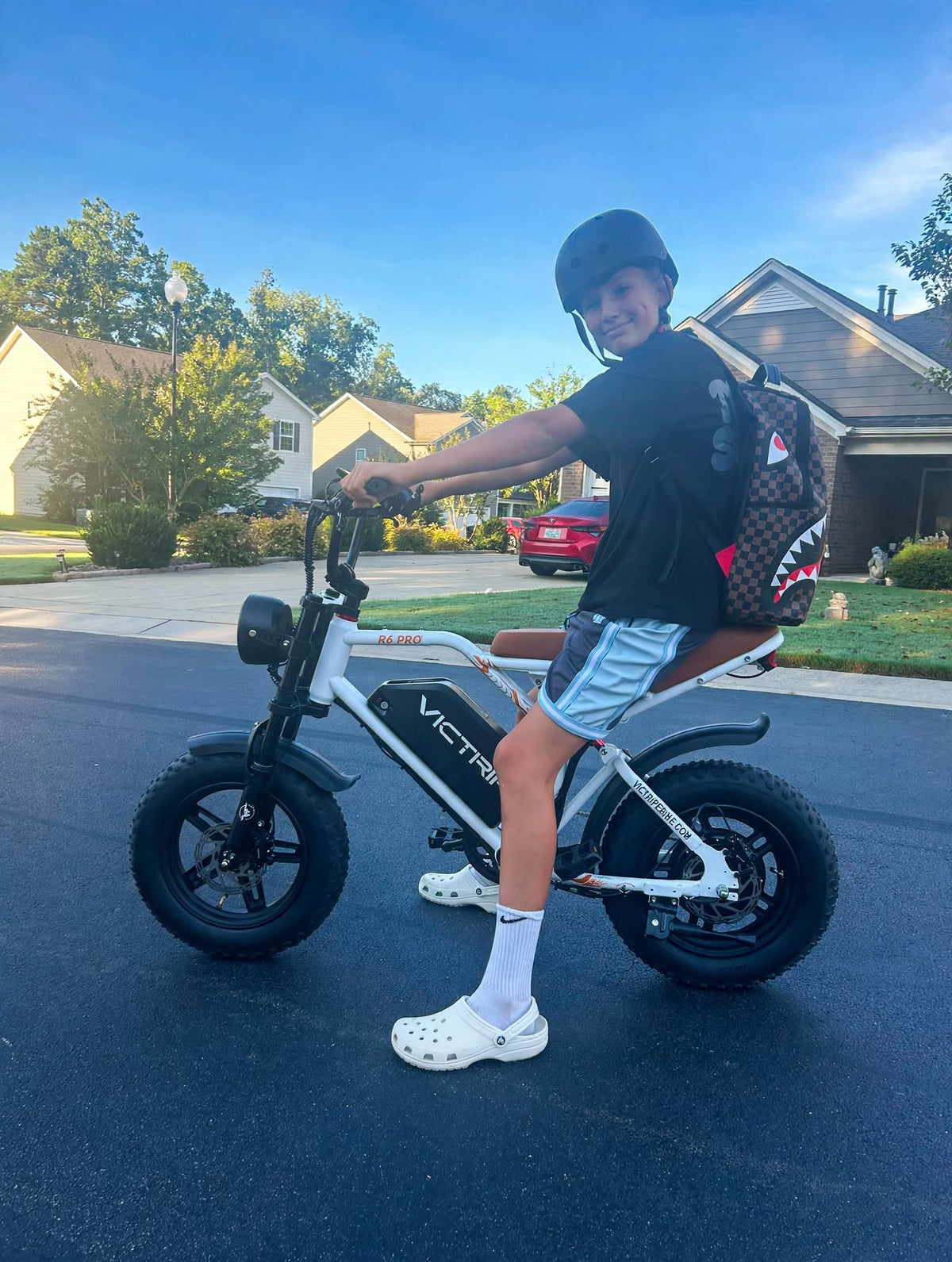
The VICTRIP R6 Pro is a good option to consider. Its moped-style design, sturdy build, and spacious seating make it a practical choice for riders who want a more comfortable and capable electric bike for everyday adventures.
Just remember that a suitable bike doesn't automatically make passenger riding legal. Always check your local regulations and make sure the bike is properly equipped before taking someone along.
TOP PICK
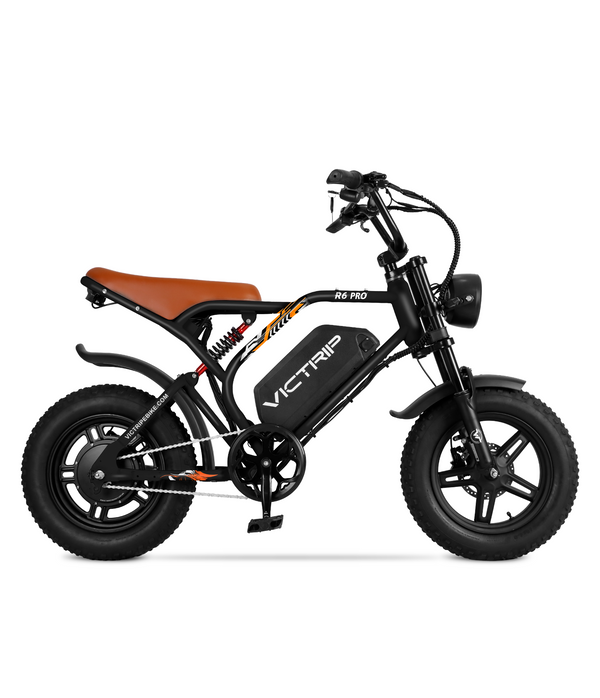
VICTRIP®R6 Pro 1500W Moped Style EBike
$1,099.00
Passenger Safety Tips for Everyday Riding
Once you've confirmed that passenger riding is legal and your bike is appropriately equipped, the next step is making the ride comfortable and predictable.
How the Passenger Should Sit
The passenger should sit directly behind the rider rather than leaning heavily to one side.
Keep the body centered and avoid sudden movements.
During turns, the passenger should follow the rider's movement naturally rather than trying to counter-steer independently.
NHTSA recommends that motorcycle passengers sit behind the operator, hold on securely, keep their feet on the footrests, and lean with the rider.
How the Passenger Should Hold On
The passenger should have a secure handhold.
Depending on the bike's design, this may be an appropriate passenger handle or another manufacturer-approved handhold.
The passenger shouldn't hold the rider's shoulders in a way that restricts steering or balance.
Communication also helps. Before starting, agree on simple signals for:
- Stop
- Slow down
- Pull over
- Emergency
A little preparation can prevent a lot of confusion.
What to Avoid
Don't carry a passenger if the bike feels unstable during a basic test.
You should also avoid passenger riding when:
- The passenger can't reach the footrests.
- The total weight exceeds the limit.
- The passenger is too young for applicable laws or equipment.
- The bike has a mechanical problem.
- Weather or road conditions are unsafe.
- The bike isn't designed for passenger use.
- You haven't checked local regulations.
And never assume that because a bike looks like a motorcycle, it automatically has the same legal status as one.
When You Should Not Carry a Passenger
Sometimes the best answer is simply no.
Don't carry a passenger if your electric bike is designed for one rider only. A long saddle isn't enough evidence that a second rider is supported.
You should also avoid it when the passenger is too small to sit securely or reach the required footrests.
Likewise, if you're carrying heavy cargo, adding another person may push the bike beyond its safe operating weight.
Weather is another consideration. Wet roads, loose gravel, snow, strong wind, and poor visibility can all increase risk. Adding a passenger makes the bike's handling more demanding.
The same rule applies to inexperienced riders. If you're still learning how to control the bike alone, adding a passenger isn't the time to test your skills.
FAQs About Carrying Passengers on Moped Style Ebikes
Can two people legally ride an electric bike?
It depends on local law and the vehicle's classification. Some jurisdictions allow passenger riding under specific conditions, while others restrict it. Always check local regulations before carrying another person.
Can I carry a child on a moped style ebike?
A child passenger may be subject to additional age, helmet, seating, or restraint requirements. Some jurisdictions have specific restrictions for young passengers. NHTSA's state-law summaries demonstrate that passenger age rules can vary considerably.
Don't assume that a child can safely ride simply because they fit on the seat.
Does a rear rack make an ebike safe for passengers?
No. A cargo rack is not automatically a passenger seat. Passenger riding requires appropriate seating and foot support, and the equipment must be compatible with the bike and its intended use.
Does carrying a passenger reduce range?
Yes, it can.
A heavier combined load generally requires more energy, particularly during acceleration, hill climbing, and stop-and-go riding. Real-world range also depends on speed, terrain, rider behavior, temperature, tire pressure, and other factors.
Is a powerful motor better for two riders?
A stronger motor can make it easier to move a heavier combined load, especially on hills.
However, power isn't the only consideration. Brakes, tires, suspension, frame strength, weight capacity, and rider skill all matter. More power should never be treated as permission to ride faster than conditions or local laws allow.
What safety gear should passengers wear?
A properly fitted helmet is the most important starting point. Depending on conditions, gloves, eye protection, closed-toe footwear, long pants, and protective outerwear are also sensible choices.
Is the VICTRIP R6 Pro suitable for carrying a passenger?
The R6 Pro has several specifications that make it a substantial moped style platform, including a listed 400-pound maximum weight capacity, full suspension, hydraulic brakes, wide tires, and high motor output.
Final Thoughts
So, can you carry a passenger on a moped style ebike? In some situations, yes—but it's never something you should decide based on the seat alone.
The safest approach is to check the law, confirm the bike's weight capacity, use appropriate passenger equipment, wear protective gear, and ride conservatively.
For riders who want a powerful and versatile moped style ebike, the VICTRIP R6 Pro is an attractive option worth considering. Its 1800W peak motor, 400-pound listed weight capacity, full suspension, hydraulic brakes, and 48V 25Ah LG battery give it a robust performance-oriented setup.
Just remember the golden rule: a powerful ebike should give you more control and capability—not an excuse to ignore passenger laws or safety basics.
If two-person riding is part of your plan, choose the bike carefully, verify the regulations, and make safety the first upgrade—not the last one.
Share:
What Is the Best Budget-Friendly Electric Dirt Bike?
Electric Mini Dirt Bike for 12 Year Olds: Size, Power, and Safety Guide